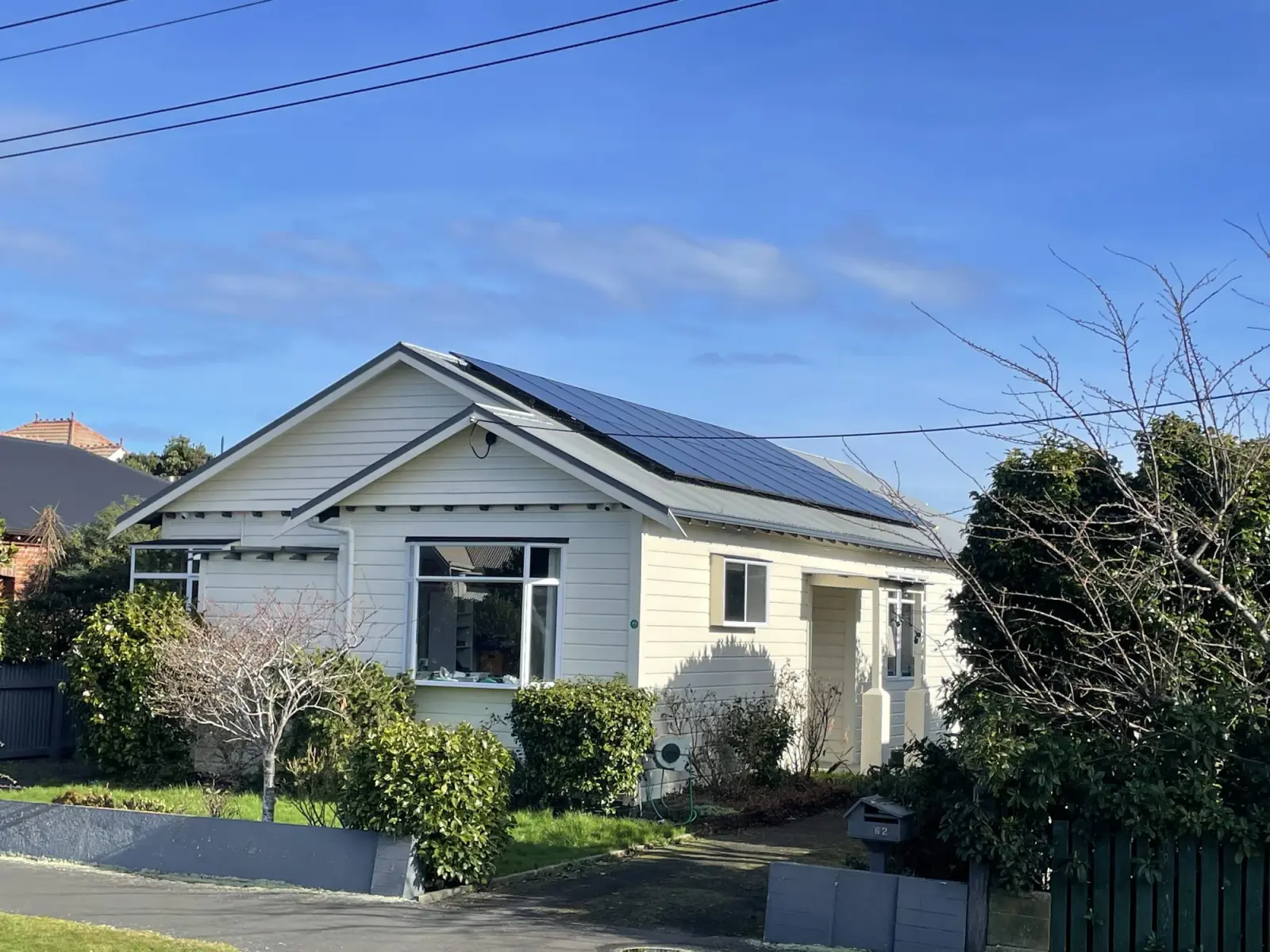
Solar power
& hot water
for Dunedin homes.
Serviceman installs solar power systems and solar hot water systems for Dunedin homes — done properly, with a certified Record of Inspection on every job.
As a registered Master Electrician, we're qualified to design, install, and certify both types of solar system. That matters more than most people realise — solar PV is classified as Prescribed Electrical Work (PEW) in New Zealand, meaning only a licensed electrical inspector can sign it off. If it isn't certified, your insurance could be void.
We use industry-leading equipment — Suntech N-type bifacial panels, and the Sigenergy SigenStor system that combines inverter, battery, and energy management in a single stack — and we handle everything from the initial site assessment through to final commissioning.
Generate electricity from sunlight. Power your home, reduce your bill, and export surplus to the grid.
Cover 70% or more of your hot water needs from free solar energy. Fastest payback of any renewable investment.
Generate your
own electricity.
A solar PV system turns sunlight into electricity that powers your home — and anything you don't use goes back to the grid, earning you an export credit from your power company.
We design each system around your property — roof orientation, shading, household usage patterns — and size it to match your actual consumption. Most Dunedin homes are best served by a 5–8 kW system, generating around 7,000–7,500 kWh per year from a 6.6 kW array.
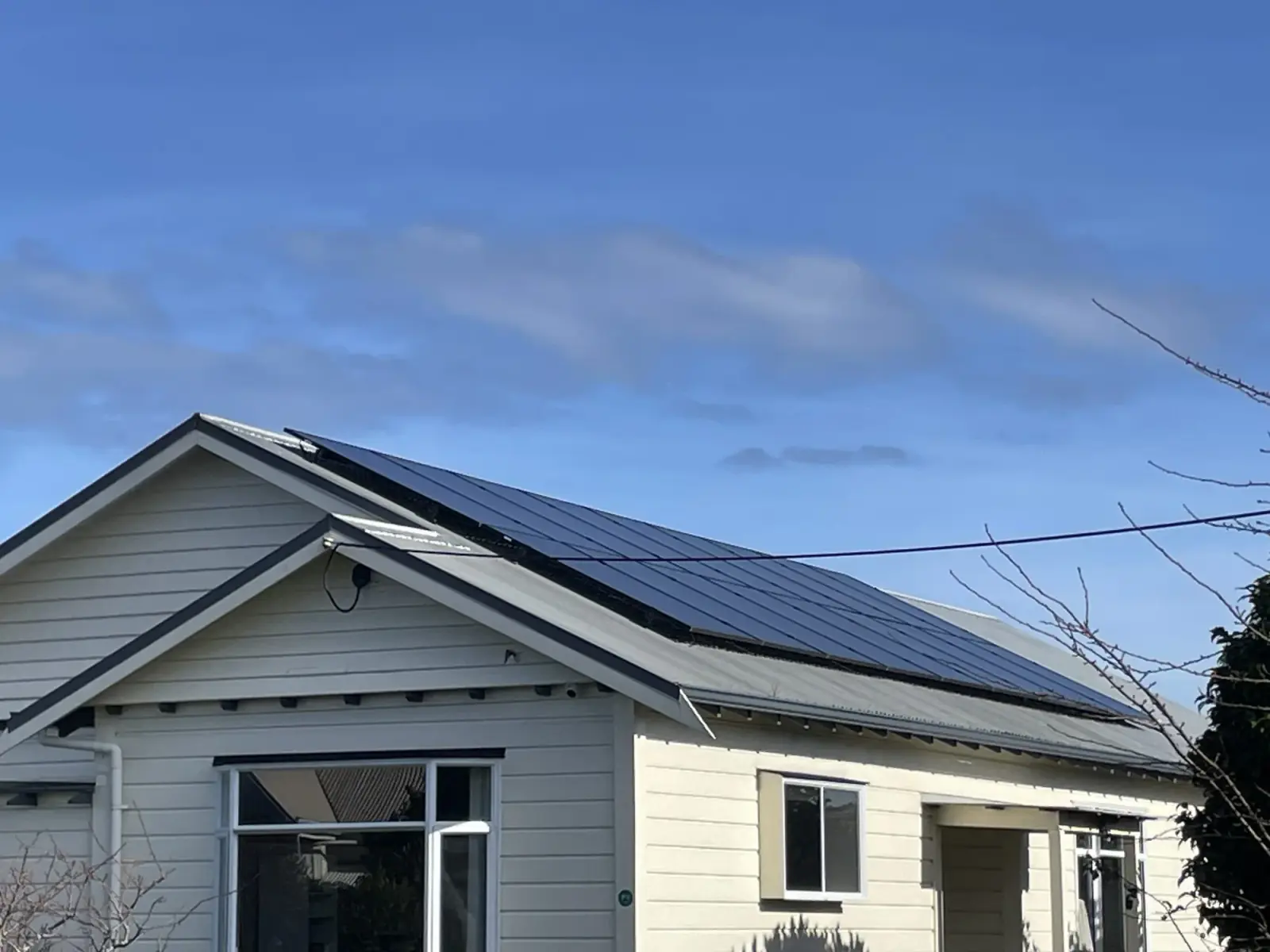
Our standard PV installations use Suntech bifacial panels built on N-type TOPCon cells — a newer cell technology that loses less output as temperatures climb, and generates from light reflected off the roof surface as well as direct sun. Paired with a Sigenergy Energy Controller at up to 98% conversion efficiency, it's a system built to produce maximum output and last the distance.
Dunedin has lower sunshine than Auckland, but power prices have risen 30–50% over the last decade. Even with a longer payback period, solar is a hedge against electricity costs that only go one way.
Battery storage
The Sigenergy system we install is built around storage rather than treating it as an afterthought. The battery stacks in modules — from 5 kWh up to 48 kWh — so you size it to your household now and add capacity later without replacing the inverter. It uses LFP cells rated to 100% depth of discharge, which means you get to use the whole battery, not the top 80% of it.
Storage lets you run the house at night on power you generated during the day, instead of buying it back at peak rates. Paired with a Sigen Energy Gateway, the system also carries your home through a power cut and restarts itself from the panels the next morning.
The fastest
return on any
renewable investment.
A solar hot water system uses roof-mounted thermal collectors to heat your water directly from the sun — free energy that covers 70% or more of your annual hot water needs.
Hot water is typically the second-largest energy expense in a NZ home. A solar hot water system cuts that cost substantially, with a payback period of around four to six years — the fastest of any renewable energy investment available in New Zealand.
The system works with an electric booster element, so you always have hot water even on overcast days. Most of the time — even in Dunedin's cooler months — the solar collectors carry the load, and the booster rarely fires.
"Thank you for the recent roof-mounted solar hot water system you installed. Even on colder days (10–14°C), the water temperature does not go below 47°C. I am very happy with my purchase."
$1,000+
From first call
to final sign-off.
We manage the entire process — site assessment, system design, installation, and the compliance certificate. You don't need to deal with council, your power company, or the grid operator. We do all of that.
Free site assessment
We visit your property to assess roof orientation, shading, structural suitability, and your existing electrical setup. No obligation — we'll tell you straight whether solar is a good fit.
System design & quote
We design a system around your usage patterns, roof layout, and budget. You'll receive a fixed-price quote detailing every component — panels, inverter, mounting hardware, wiring, and installation labour.
Professional installation
Our qualified electricians carry out the full installation — panels, inverter, switchboard connection, and grid interconnection. Work is clean and tidy, and your home is left exactly as we found it.
Record of Inspection issued
Every Serviceman solar installation is certified with a Record of Inspection (ROI) — the legal compliance certificate required for solar PV systems in New Zealand. This protects your insurance and proves the work meets the required safety standard.
Industry-leading equipment.
Long-term warranties.
Suntech has been manufacturing solar panels since 2001 and has shipped more than 50 GW worldwide. We install their bifacial Ultra V Pro range, built on N-type TOPCon cells — a newer cell technology that holds its output better in cool conditions than the PERC panels most systems still use. Bifacial construction means they also generate from light reflected off your roof.
The heart of the SigenStor system. It converts the DC power from your panels into AC electricity for your home, manages the battery, and runs the whole system through onboard energy management. Sigenergy was founded by the team that led Huawei's Smart PV division, and its equipment is certified to AS/NZS 4777.2 for New Zealand conditions.
Stackable battery modules that scale from 5 kWh to 48 kWh, so you can start at the size your household needs and add modules later without replacing the inverter. LFP cells rated to 100% depth of discharge — you use the whole battery, not the top 80% — with monitoring through the mySigen app on your phone.
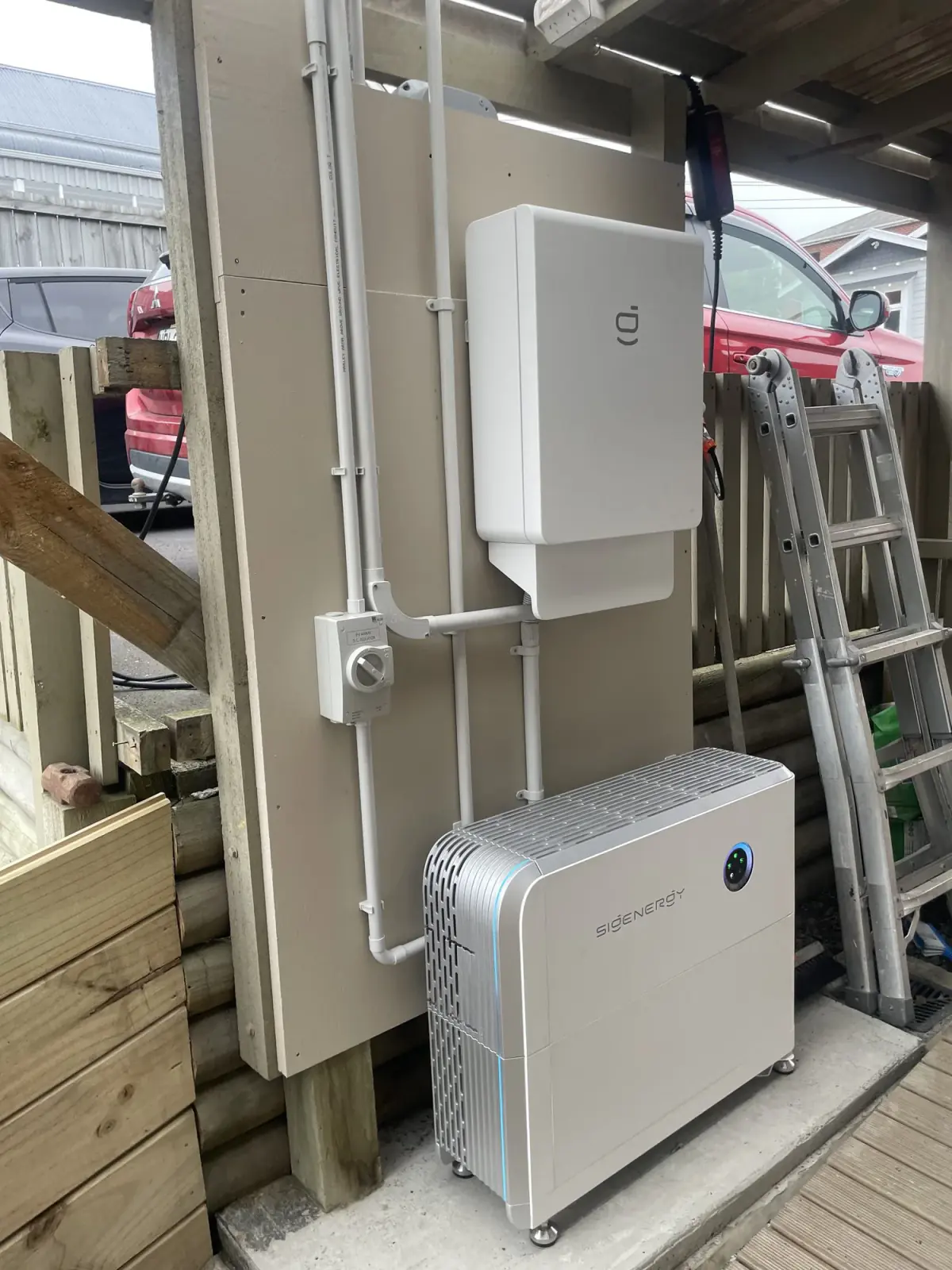
A SigenStor unit, isolators and labelled DC conduit on a Dunedin install. Panels get the attention, but the switchgear behind them is where the workmanship shows — clean conduit runs, correctly labelled DC, and terminations an inspector can sign off without argument. That is the part you are paying a Master Electrician for.
Sigenergy provides a 10-year warranty on the Sigen Battery and Sigen Energy Controller, and warrants that the battery will still hold 70% of its usable energy at 10 years (or a minimum energy throughput, whichever comes first). Two conditions are worth knowing before you buy. The 10-year term depends on the system staying connected to the internet so Sigenergy can apply firmware updates — if it's offline for an extended period, cover reduces to five years from installation. And Sigenergy's standard warranty excludes equipment installed within 500 metres of the coastline, which takes in a fair share of Dunedin. We'll tell you exactly where your property stands at the site assessment rather than let you find out later. Full terms are set out in Sigenergy's Factory Limited Warranty for SigenStor (Australia and New Zealand).
Questions we
get asked.
If your question isn't here, call us on 03 455 3333 or use the form below.
Will solar panels work in Dunedin's climate?
Yes. Dunedin receives 1,676 sunshine hours per year — fewer than Auckland but comparable to parts of Germany, which has one of the highest solar adoption rates in the world. Modern solar panels generate electricity on cloudy days too, not just in direct sunlight. The payback period is longer in Dunedin than further north (typically 10–13 years for PV), but post-payback you're generating free electricity for 15+ years. Solar hot water has a shorter payback of 4–6 years regardless of latitude, because of how effectively thermal collectors work even in diffuse light.
How long does installation take?
A typical residential solar PV system takes one to two days to install, depending on system size and roof complexity. Solar hot water installations are usually completed in a single day. After installation, we handle the grid interconnection paperwork and issue your Record of Inspection before we leave.
Do I need council consent for solar panels?
For most standard residential rooftop solar installations on existing buildings, building consent is not required under current New Zealand regulations. We'll confirm this at your site assessment — if your property is in a heritage or special character zone, the rules may differ. Either way, we manage any required consents as part of the installation process.
What happens to my surplus power?
Any electricity your system generates that you don't use immediately is exported back to the grid. Your power company pays you a buyback rate for this exported power. Rates vary by retailer and time of day — since April 2026, New Zealand distributors have been required to offer rebates during peak demand periods, improving the economics of grid-connected solar. We can advise on the best power plan to complement your system.
Do I need battery storage?
You can run a grid-connected system without one, and plenty of homes do. But the Sigenergy system we install is designed around storage rather than treating it as an add-on. Batteries let you store daytime solar generation and use it at night, increasing self-consumption from roughly 30–40% to 70–90% — so you're using the power you generated instead of buying it back at peak rates. The Sigen battery stacks in modules from 5 kWh to 48 kWh, so you can start at the size that suits your household and add capacity later without replacing the inverter or panels.
We come to you.
Tell us about
the job. We'll be
in touch by tomorrow.
Or call us on 03 455 3333. We're in the workshop 8am–4:30pm, Monday to Friday.